



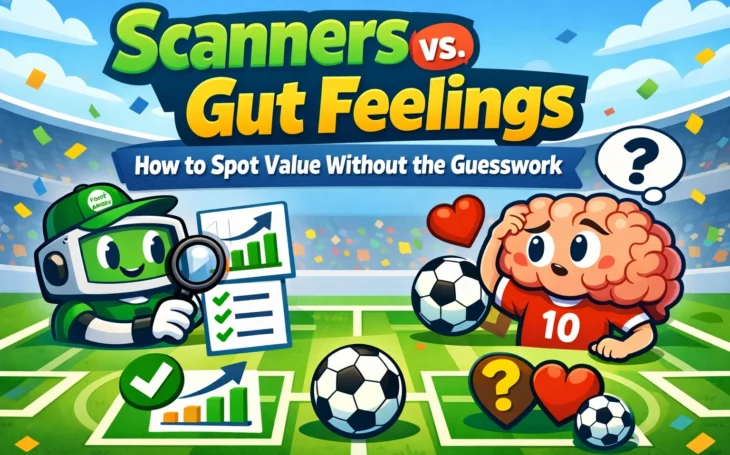
Gut Feelings; we’ve all been there. It’s Saturday afternoon, 75 minutes on the clock, and you’re watching a game where the home side is absolutely battering the opposition. You look at your mate and say, “I’ve got a feeling there’s a goal coming here.” That’s your gut talking. It’s that internal whisper that tells you a comeback is on the cards or that the underdog is about to crumble.
Sometimes, your gut is right. You place the bet, the goal flies in, and you feel like a genius. But more often than not, that “feeling” is just a mix of hope, bias, and the three beers you’ve had since kick-off.
In the world of football betting, relying solely on your gut is a fast way to donate your hard-earned cash to the bookies. On the flip side, staring at spreadsheets all day is enough to make anyone’s head spin.
The secret to winning long-term isn’t choosing between your gut and the data. It’s about using betting analytics to keep your gut in check. Let’s talk about how to stop guessing and start finding actual value.
The “eye test” is what we call watching a game and making a judgment call. It’s valuable, but it’s also incredibly flawed.
As humans, we are naturally biased. We suffer from something called “recency bias”, if a team scored a last-minute winner last week, we assume they’ll do it again today. We also have “big team bias.” We see a name like Real Madrid or Liverpool and assume they must be dominating, even if they’re actually struggling to string two passes together.
Your gut ignores the things that don’t fit your narrative. It ignores the fact that the team “dominating” hasn’t actually had a shot on target in twenty minutes. It ignores the fact that the underdog is actually counter-attacking with lethal efficiency.
This is where the guesswork starts. And in betting, guesswork is expensive.

Imagine if you could watch 50 games at the exact same time. Imagine if you could track every corner, every shot on target, and every dangerous attack across every league in the world, from the Premier League to the Vietnamese Second Division.
That’s essentially what a soccer scanner does.
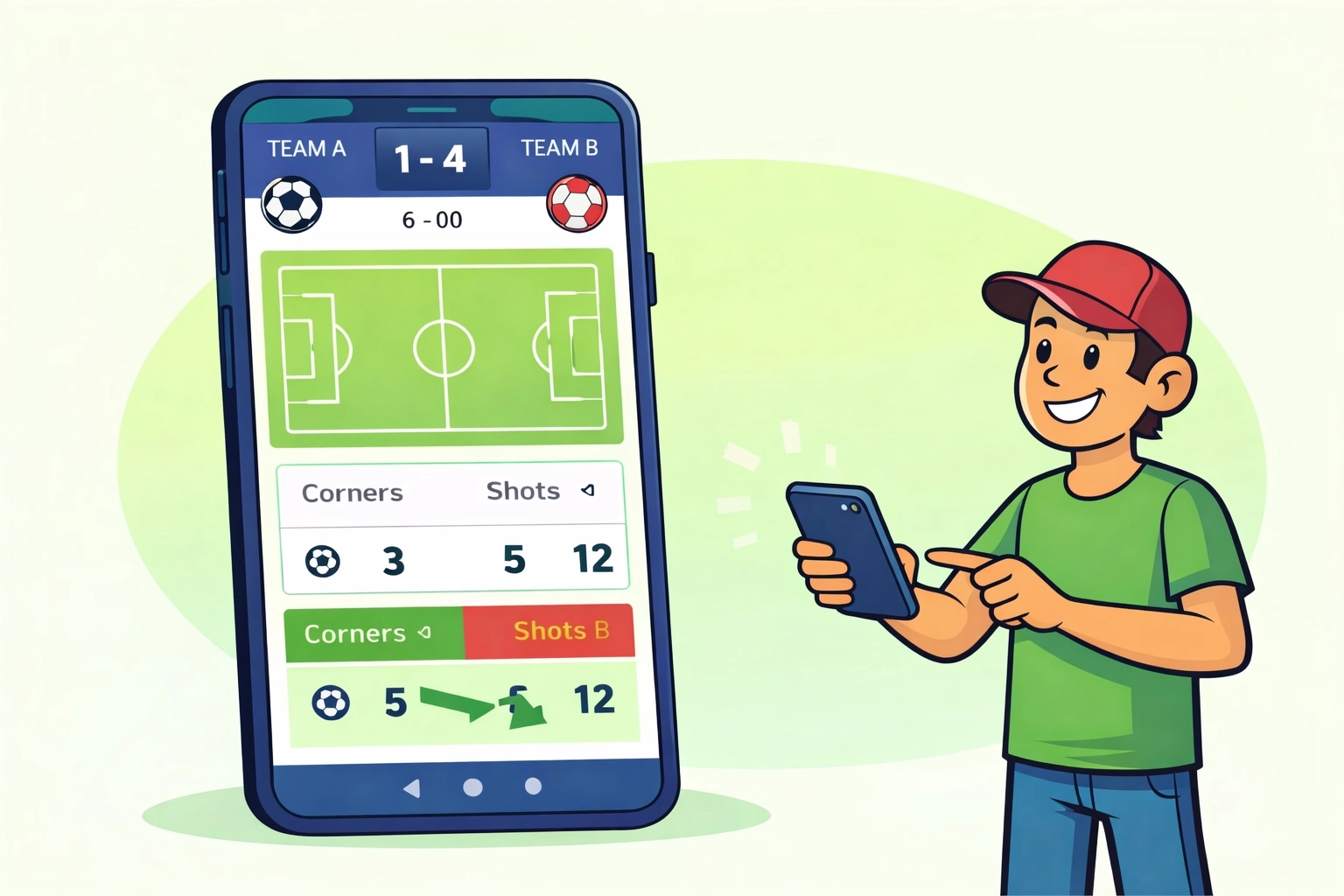
Instead of relying on a “vibe,” an in play scanner gives you cold, hard facts. It tells you that while Team A has 70% possession, Team B has had 5 shots on target in the last 10 minutes.
Data doesn’t care about the name on the shirt. It doesn’t care about the history of the club. It only cares about what is happening on the pitch right now.
Using a tool like Footy Amigo allows you to set filters so you only see the games where the data matches a winning pattern. Instead of hunting for bets, the bets come to you.
You’ll hear the word “value” thrown around a lot. Most people think value means picking a winner. It doesn’t.
Value is simply when the probability of an event happening is higher than what the bookies’ odds suggest.
Think of it like this: If you’re at a coin toss and someone offers you odds of 3.0 (2/1) that it lands on heads, that is incredible value. You might lose the individual toss, but if you take that bet 100 times, you’ll be rich.
Finding value in football is about spotting discrepancies. Your gut might say “Man City will win,” but if the odds are 1.10, there is zero value there. However, if an in play scanner shows that a heavy favorite is facing 15 dangerous attacks in a 10-minute window and the odds for “Next Goal” are high, you’ve found a potential value spot.

The best professional bettors don’t ignore their gut; they calibrate it. They use a hybrid approach that combines systematic analysis with their experience.
Here is a simple way to look at it:
Now, your “gut feeling” that a goal is coming is backed by data. You aren’t guessing anymore. You are making an informed decision based on a proven process. This is the core of how to find value in football betting.
Before you go off and start building your empire, let’s talk about the traps most punters fall into. Even with the best tools, you can still trip up if your process is messy.
Just because a team is famous doesn’t mean they are playing well. Scanners help you ignore the branding and focus on the performance. Don’t bet on Chelsea just because they’re Chelsea. Bet on them because they have 12 shots on target and the opposition goalkeeper is having a nightmare.
Data is great, but context matters. A team might have 10 shots on target, but if they’ve all been from 40 yards out directly at the keeper, are they really “dominating”? This is why we use [betting analytics](https://footyamigo.com) to look at “Dangerous Attacks” and “Shots Inside the Box.”
“They haven’t scored in three games, they’re due a goal.” No, they aren’t. They might just be terrible at finishing. Don’t bet on a turn-around unless the live data shows the tide is actually turning.

The goal isn’t to find a “magic” strategy that wins 100% of the time. That doesn’t exist (and if someone tells you it does, they’re probably selling fixed matches nonsense).
The goal is to build a repeatable process.
Start small. Pick one market: maybe “Over 0.5 Second Half Goals” or “Match Corners.” Use Footy Amigo to look at the historical stats for those teams. Does the home team usually score late? Does the away team concede most of their goals after the 70th minute?
Once you have a baseline, use the in play scanner to alert you when those specific conditions are met in real-time.
By doing this, you’re moving away from “gambling” and toward “betting.” The difference between gambling and betting is all in the process. Gamblers look for a rush; bettors look for an edge.
You don’t need to be a math genius to use betting analytics. You just need to be consistent.
The punter who follows a strict set of rules and uses data to filter their bets will almost always outperform the “genius” who relies on his gut and hits a 20-fold accumulator once every six months.
Think of your betting bankroll like a business. A business wouldn’t make a major investment because the CEO had a “dream” about it. They’d look at the data, the market trends, and the risks. You should treat your bets the same way.
Ask yourself: “If I made this exact bet 1,000 times, would I come out ahead?” If the answer is “I don’t know, I just feel like they’ll win,” then you probably shouldn’t be placing that bet.
If you remember nothing else from this, remember this: Data tells you what is possible; your eyes tell you what is happening; but value tells you what to bet.
Stop trying to predict the future with your gut. Start using tools to filter the noise so you can focus on the games that actually matter. It takes the emotion out of the game and makes the whole experience a lot less stressful (and hopefully, a lot more profitable).
We’re here to help you turn the tide against the bookmakers by giving you the same level of information they have. Whether you’re checking out Soccer Vista vs PredictZ or looking for the best football prediction site in the world, the key is always the same: Better data leads to better decisions.
Next time you’re tempted to bet on a “hunch” in-play, wait 5 minutes. Check the in play scanner for “Dangerous Attacks” in the last 10 minutes. If the team you’re backing hasn’t had at least 1 dangerous attack per minute, keep your money in your pocket. Your gut is likely just being impatient!
[…] we’ve discussed before in our look at scanners vs. gut feelings, relying on your eyes alone is the quickest way to empty your […]