



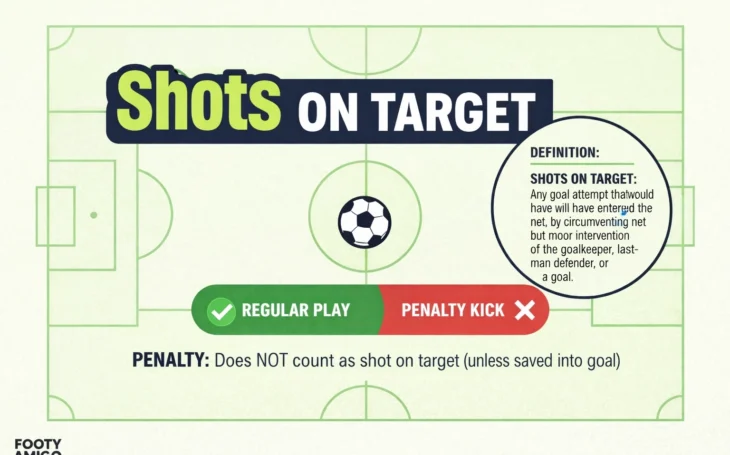
If you’ve ever placed a bet on shots on target, you’ve probably found yourself staring at a penalty situation wondering: “Does this actually count?” It’s one of those betting questions that seems simple until you really think about it. And honestly, the answer isn’t as straightforward as you might expect.
The confusion makes perfect sense. Penalties are different from regular play, they’re practically guaranteed to hit the target area, and they happen under completely different circumstances. So when your accumulator is riding on whether Harry Kane gets 2+ shots on target, and he steps up to take a penalty in the 89th minute, you want to know exactly what you’re dealing with.
Let me walk you through everything you need to know about shots on target betting and penalties, because getting this wrong can be the difference between a winning bet and a frustrating loss.
Before we dive into the penalty debate, let’s establish what we’re working with. Shots on target are any deliberate attempts to score that would result in a goal unless they’re stopped by the goalkeeper or a defender on the goal line.
Think about it this way: if there was no keeper in the goal, would the ball go in? If yes, it’s on target. If it hits the post and bounces out, that’s off target. If it flies over the crossbar, definitely off target. But if the keeper makes a brilliant save or a defender clears it off the line, that’s on target.
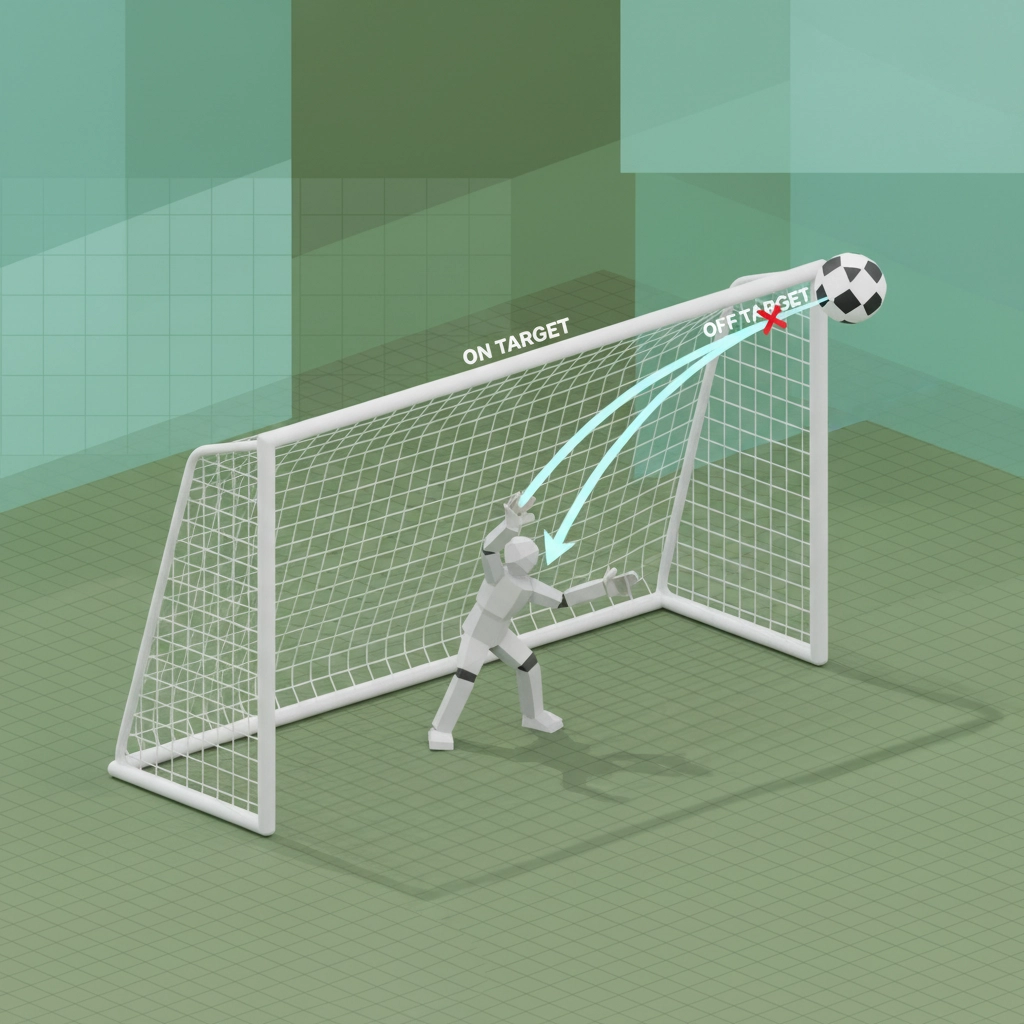
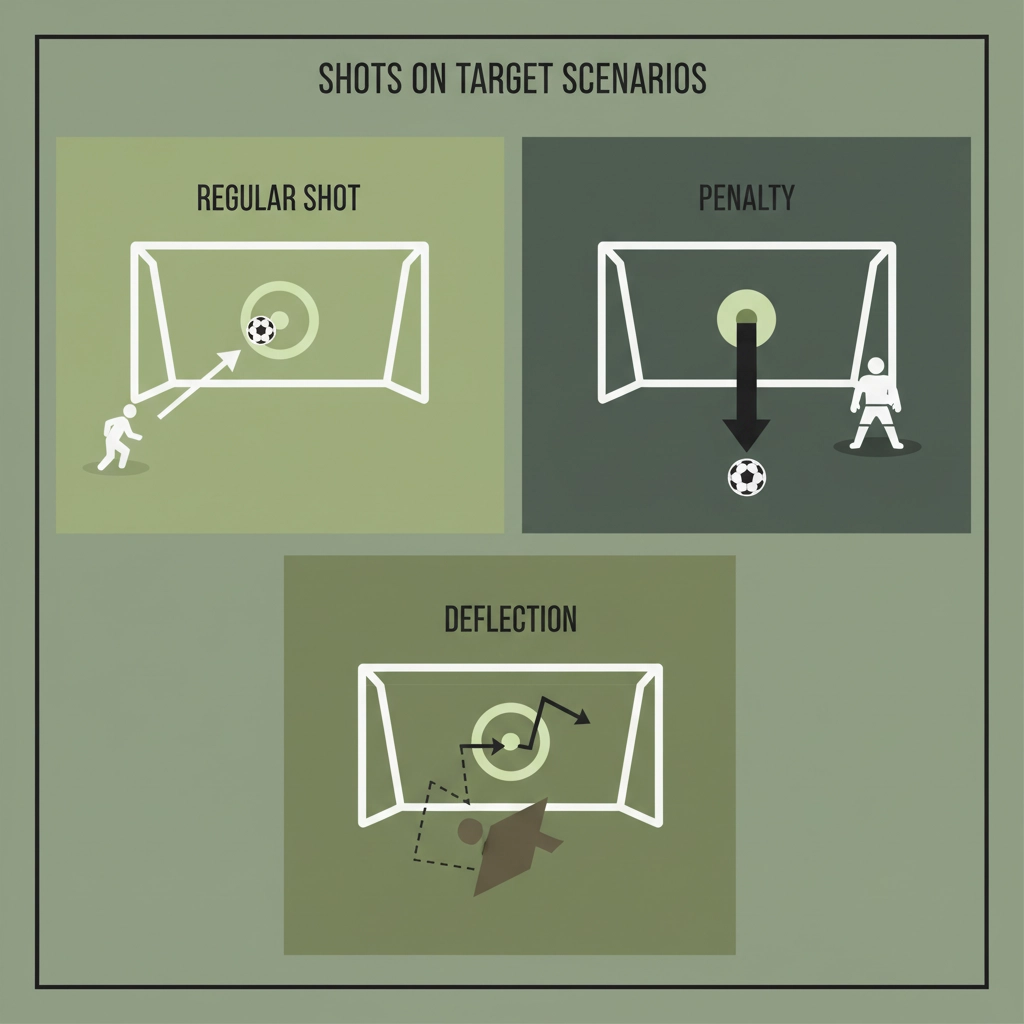
This definition might seem obvious, but there are some nuances worth understanding. A deflection that sends the ball toward goal doesn’t automatically make it shots on target for the original shooter. The key word here is “deliberate.” If a player mishits a cross and it happens to force a save from the keeper, that’s not counted as shots on target because the intent wasn’t there.
Similarly, own goals create an interesting scenario. If a defender deflects a shot that was already on target, the original shooter still gets credited with the shots on target. But if the shot was heading wide and the deflection sends it goalward, it doesn’t count as on target for the original shooter.
Now for the main event. Yes, penalties do count as shots on target – but only if they’re either scored or saved by the goalkeeper.
This might sound a bit strange at first, but it follows the same logic as regular shots. If a penalty is scored, it obviously would have gone in without a keeper (because it did go in). If a penalty is saved, it would have gone in without the keeper intervention. Both scenarios count as shots on target.
But here’s where it gets interesting: if a penalty is missed – meaning it goes wide of the goal, hits the post, or flies over the crossbar – it’s classified as shots off target. The logic holds up: without a keeper, it still wouldn’t have gone in.
Think about when you’re watching a match and someone blasts a penalty over the bar. That sick feeling in your stomach if you’ve backed them for shots on target? Yeah, that’s justified. It doesn’t count.

This rule applies whether we’re talking about penalties awarded during regular play, extra time, or even those last-gasp penalties that decide cup matches. The timing doesn’t matter – only whether the ball would have found the net without goalkeeping intervention.
Let me give you some scenarios that really drive home how this works in practice.
Scenario 1: You’ve backed Erling Haaland to have 3+ shots on target. He’s had two legitimate attempts saved, then wins a penalty in the 75th minute. He slots it into the bottom corner. That’s your third shots on target scenario – bet wins.
Scenario 2: Same situation, but Haaland sends the penalty flying into Row Z. You’re stuck on two shots on target, and unless he gets another clear chance, your bet loses.
Scenario 3: Haaland hits his penalty well, but the keeper makes a world-class save. Still counts as a shots on target scenario because the ball would have gone in without the goalkeeper’s intervention.
The interesting cases come when penalties hit the woodwork. If a penalty strikes the post and bounces in, it counts as on target (because it resulted in a goal). If it hits the post and bounces out, it’s off target because it wouldn’t have gone in without a keeper anyway.
Here’s something that catches a lot of bettors off guard: penalties in shootouts don’t count toward shots on target statistics at all.
If a match goes to penalties after extra time, those penalty kicks exist in their own statistical bubble. Whether they’re scored, saved, or missed, they don’t affect any shots-related betting markets. This makes sense when you think about it – penalty shootouts are essentially a separate competition to decide the winner, not part of the actual match.
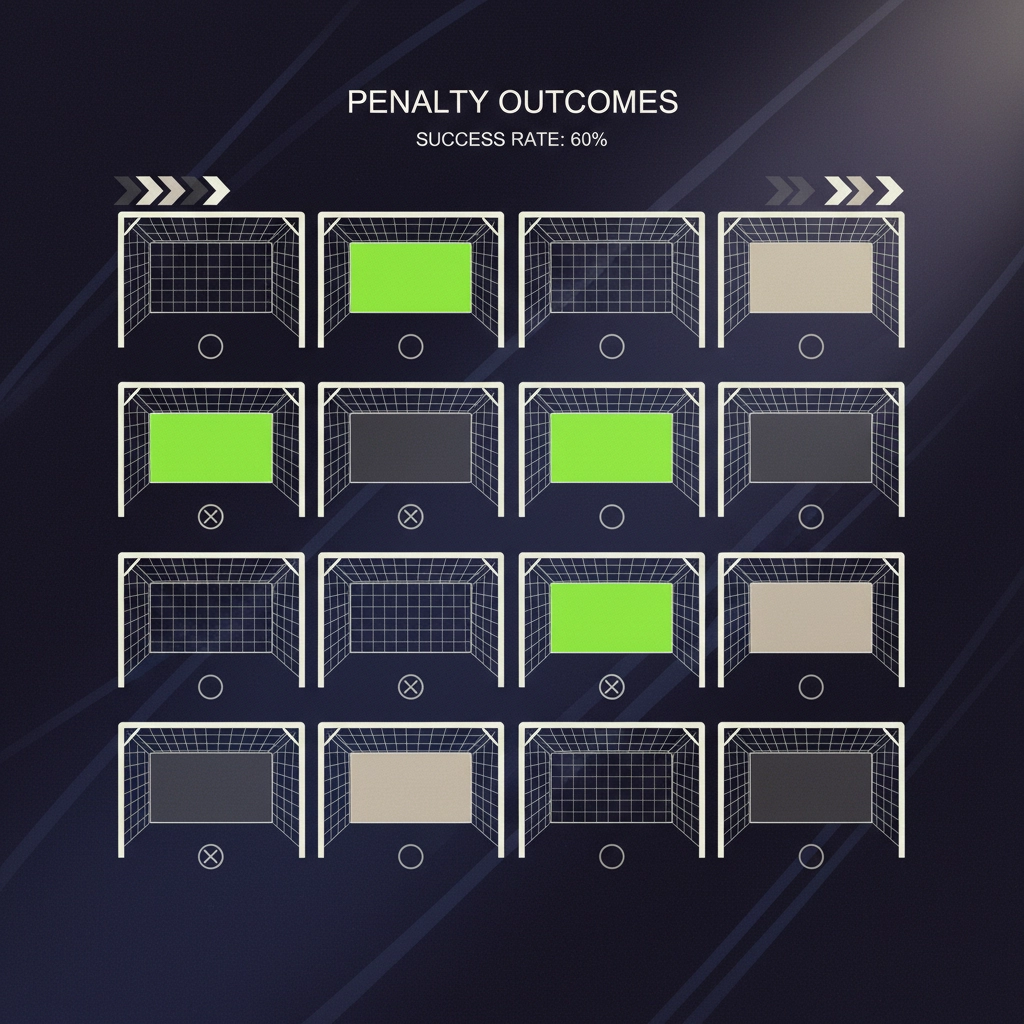
This distinction becomes crucial during major tournaments when matches regularly go to penalties. You might watch a player score twice in a penalty shootout, but it won’t help if you’ve backed them for shots on target during the match.
I’ve seen bettors get confused about this, especially during World Cups or European Championships where penalty shootouts are common. The key thing to remember is that when bookmakers settle shots on target bets, they only look at the 90 minutes plus any extra time – not the shootout.
Understanding the penalty rules becomes especially important when you’re placing certain types of bets. Player shots on target markets are obviously affected, but team total shots on target can also swing based on penalty situations.
If you’re backing a team to have over a certain number of shots on target, a well-taken penalty can be the difference between winning and losing your bet. Conversely, a missed penalty might leave you one short when you thought you had it wrapped up.
Some bettors actually factor penalty likelihood into their shot on target betting strategy. Teams with players who win a lot of penalties or take penalties regularly might be worth backing for higher shot totals, assuming those penalties are converted or at least hit the target.
The reverse psychology also works. If you know a team’s penalty taker has been struggling with accuracy lately, you might be more cautious about backing them for shot on target markets, especially if they’re known for winning penalties.
From what I’ve observed analyzing thousands of matches, penalty conversion rates tend to be much higher than regular shots accuracy. Most professional players convert around 75-85% of their penalties, and even when they miss, they usually hit the target area more often than not.
This means that penalties generally increase a player’s or team’s expected shots on target. It’s not a guarantee – we’ve all seen players blaze penalties over the bar – but statistically, a penalty is more likely to count toward shot on target totals than an average shot from open play.
Smart betting tools can help you track these patterns. When you’re using platforms like Footy Amigo, you can see historical data on penalty situations and how they’ve affected shots statistics, which helps you make more informed decisions about these markets.
The biggest mistake I see is bettors assuming all penalties automatically count as shots on target. This leads to overconfidence in certain betting situations and disappointment when penalties are missed wide.
Another common error is not distinguishing between regular penalties and penalty shootouts. I’ve heard bettors complain about losing shots on target bets even though “their player scored in the shootout.” Understanding this distinction can save you from frustration and help you bet more accurately.
Some bettors also underestimate how penalty situations can completely change the maths of shots on target betting. A single penalty can turn a losing position into a winning one, or vice versa, so it’s worth considering penalty likelihood when evaluating these markets.
The key insight here is that penalties are essentially high-percentage shots on target opportunities, but they’re not guarantees. When you’re evaluating shots on target bets, consider not just a player’s general shooting accuracy, but their penalty-taking responsibilities and recent penalty record.
Teams that win a lot of penalties or have reliable penalty takers might be undervalued in shots on target markets. Similarly, individual players who regularly take penalties have an additional route to hitting shots on target totals beyond their regular shooting opportunities.
Understanding these rules gives you an edge in markets where other bettors might be confused or operating with incomplete information. When everyone else is uncertain about whether penalties count, you’ll know exactly what to expect.
The bottom line is simple: penalties count as shots on target when scored or saved, but not when missed. Penalty shootouts don’t count at all. Armed with this knowledge, you can approach shots on target betting with much more confidence and accuracy.
[…] looking for BTTS and over 2.5 tips to find high-scoring games or you’re trying to understand if a penalty counts as a shot on target, the more you know, the less you’re […]