



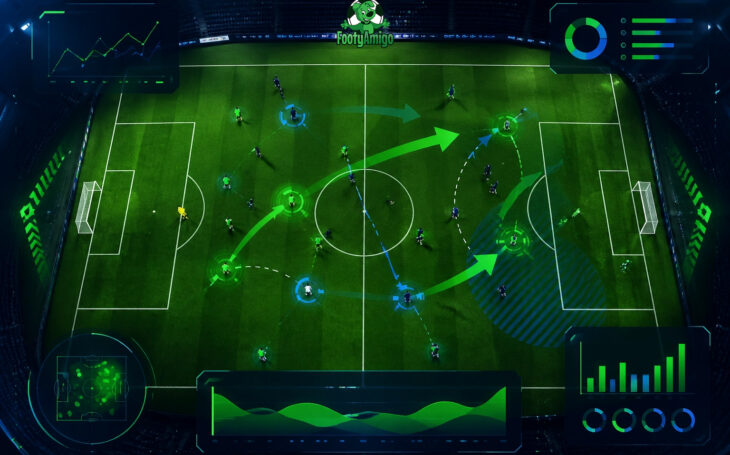
Momentum Shift; we’ve all been there. You’re sat on the sofa, half-watching a mid-week Championship clash, and suddenly, the atmosphere changes. One team, previously happy to just pass the ball sideways and bore everyone to tears, suddenly finds a second gear. They win a corner. Then another. A shot fizzles just past the post. The commentator starts talking about “the tide turning.”
You know a goal is coming. You can feel it in your bones. But by the time you’ve fumbled for your phone, unlocked your betting app, and found the match, the odds have slashed from 2.10 to 1.50, or worse, the “Market Suspended” message pops up because the ball is already in the back of the net.
Frustrating, isn’t it?

The truth is, betting on “vibes” doesn’t scale. You can’t watch every game at once, and your gut feeling, while occasionally brilliant, isn’t a strategy. To join the top 1% of punters, you need to stop relying on your eyes and start relying on an in play scanner. You need to quantify that “feeling” into hard, cold data.
In this guide, we’re going to deep-dive into how you can spot momentum shifts using football in play trading strategies that actually work, so you can beat the bookies to the punch.
In physics, momentum is mass times velocity. In football, it’s a bit more nuanced, but the principle is the same: it’s the force that carries a team forward.
Most casual bettors think momentum is just “having the ball.” They see a team with 65% possession and assume they are dominating. But as any seasoned trader will tell you, possession can be a trap. A team can pass the ball between their two centre-backs for eighty minutes and achieve nothing.
True momentum is about intent and efficiency. It’s not about how long you have the ball; it’s about what you do with it when you’re in the final third.

To spot a real momentum shift, you need to look for pressure. Pressure is what forces mistakes. Pressure is what leads to corners, cards, and: ultimately: goals. This is where your in play scanner comes into its own. Instead of looking at the overall possession, we look at the “Field Tilt”: how much of that possession is happening in the opponent’s defensive third.
If you want to master football in play trading strategies, you need to ignore the fluff and focus on the metrics that actually correlate with goals. At Footy Amigo, we’ve crunched the numbers on millions of matches, and two stats stand head and shoulders above the rest: Dangerous Attacks and Shots on Target.
A “Dangerous Attack” is generally defined as an attacking move that reaches the final third or enters the penalty area.
When you see a sudden spike in Dangerous Attacks (DA) over a short window: say, 10 or 15 minutes: that is a massive red flag that the momentum has shifted. If a team has been averaging 1 DA per minute and suddenly ramps it up to 3 DA per minute, they aren’t just playing; they are sieging.
Pro Tip: Look for the ratio of Attacks to Dangerous Attacks. If a high percentage of a team’s total attacks are “Dangerous,” they are slicing through the opposition like a hot knife through butter.

We’ve all seen teams take 20 shots and not score, usually because they’re speculative long-range efforts that end up in Row Z. This is why “Total Shots” can be misleading.
Shots on Target (SOT), however, are a different beast. An SOT forces a save, a corner, or a goal. It creates chaos. When a team starts racking up SOTs in quick succession, it’s a sign that the goalkeeper is under pressure and the defence is starting to crack.
If you combine a high DA count with a couple of SOTs within a 5-minute window, you’ve found a “Momentum Storm.”
You might think, “Penny, I can see all this by just watching the game!”
Can you, though? Can you watch 15 games across the Brazilian Serie B, the Dutch Eerste Divisie, and the English League Two simultaneously? Probably not without a very expensive electricity bill and a divorce.
The human brain is also prone to “Confirmation Bias.” You want the home team to win, so you ignore the three times the away team countered dangerously. An in play scanner doesn’t have a favourite team. It doesn’t care about the badge. It only cares about the numbers.
Using a tool like Footy Amigo allows you to set filters that scan thousands of matches in real-time. It acts as your personal 24/7 assistant, tapping you on the shoulder only when a game meets your exact “Momentum” criteria.
This is how you move from gambling to building a winning betting system.
Now that we know what to look for, how do we turn this into a profitable strategy? Here are two frameworks you can start using today.
This is perfect for the “Over 0.5 Second Half Goals” market or the “Next Goal” market.
We’ve all seen a big team (think Man City or Real Madrid) go 1-0 down early against a minnow. The odds for the favourite to win jump significantly.

Setting this up on Footy Amigo is easier than making a cup of tea (and much more profitable).
Before you go live, don’t forget to backtest your strategy to see how it would have performed over the last few months. It’s like having a time machine for your bankroll.
Even with the best data, betting involves risk. Here are the most common mistakes people make when trading momentum:

Spotting momentum shifts isn’t about being a psychic; it’s about being a mathematician. By using an in play scanner to track Dangerous Attacks and Shots on Target, you stop guessing and start reacting to what is actually happening on the pitch.
Remember, the bookies use high-level AI to set their prices. If you’re still betting based on a “feeling” you got while eating a prawn cracker, you’re bringing a knife to a gunfight. Level the playing field with data.
The Practical Tip to Remember:
Next time you see a team dominate possession, ignore it. Look at their Dangerous Attacks in the last 10 minutes instead. If that number is spiking, the goal is coming: regardless of what the “vibes” say.
Ready to stop guessing? Create your first momentum alert on Footy Amigo today and start betting like a pro.