



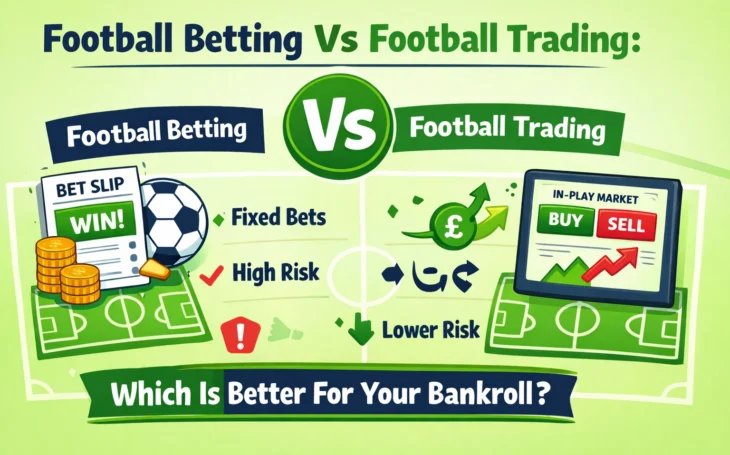
Football Trading; right then, let’s settle a debate that’s probably caused more arguments in the pub than whether or not the offside rule actually makes sense.
You’re sitting there on a Saturday afternoon. You’ve got your accumulator sorted, or maybe you’re eyeing up a single on the late kick-off. You’re a punter, right? But then you hear your mate talking about “greening up,” “laying the draw,” and “exit strategies.” He’s not betting; he’s trading.
It sounds fancy. It sounds like something guys in suits do in the City, but instead of oil and gold, they’re trading goals and corners.
But here’s the million-pound question: if you’re looking to actually grow your bankroll and stop donating your hard-earned cash to the bookies every weekend, which one should you be doing? Is it better to stick to traditional football betting, or is it time to learn the ropes of football trading?
Grab a pint, get comfy, and let’s dive into the guts of it.
We all know this one. This is the bread and butter of the Saturday experience. You look at the fixtures, you check the form, and you decide that Arsenal are definitely going to beat Everton at home. You put your £20 on, and you wait.
In technical terms, football betting is outcome-dependent. You are making a binary choice. Either the event happens (Arsenal win) and you get paid, or it doesn’t, and your money stays in the bookie’s pocket.
The beauty of betting is its simplicity. You don’t need to be glued to a screen for 90 minutes. You place your bet, go for a walk, and check the score later. If you hit a long-shot accumulator or a high-odds underdog, the payout can be massive compared to your stake.
The downside? It’s high variance. Your bankroll is constantly on a rollercoaster. You can be right for 89 minutes, but a last-second deflected goal ruins everything. When you bet, your entire stake is at risk until the final whistle blows. This is why most punters lose, they can’t handle the swings and start chasing losses.
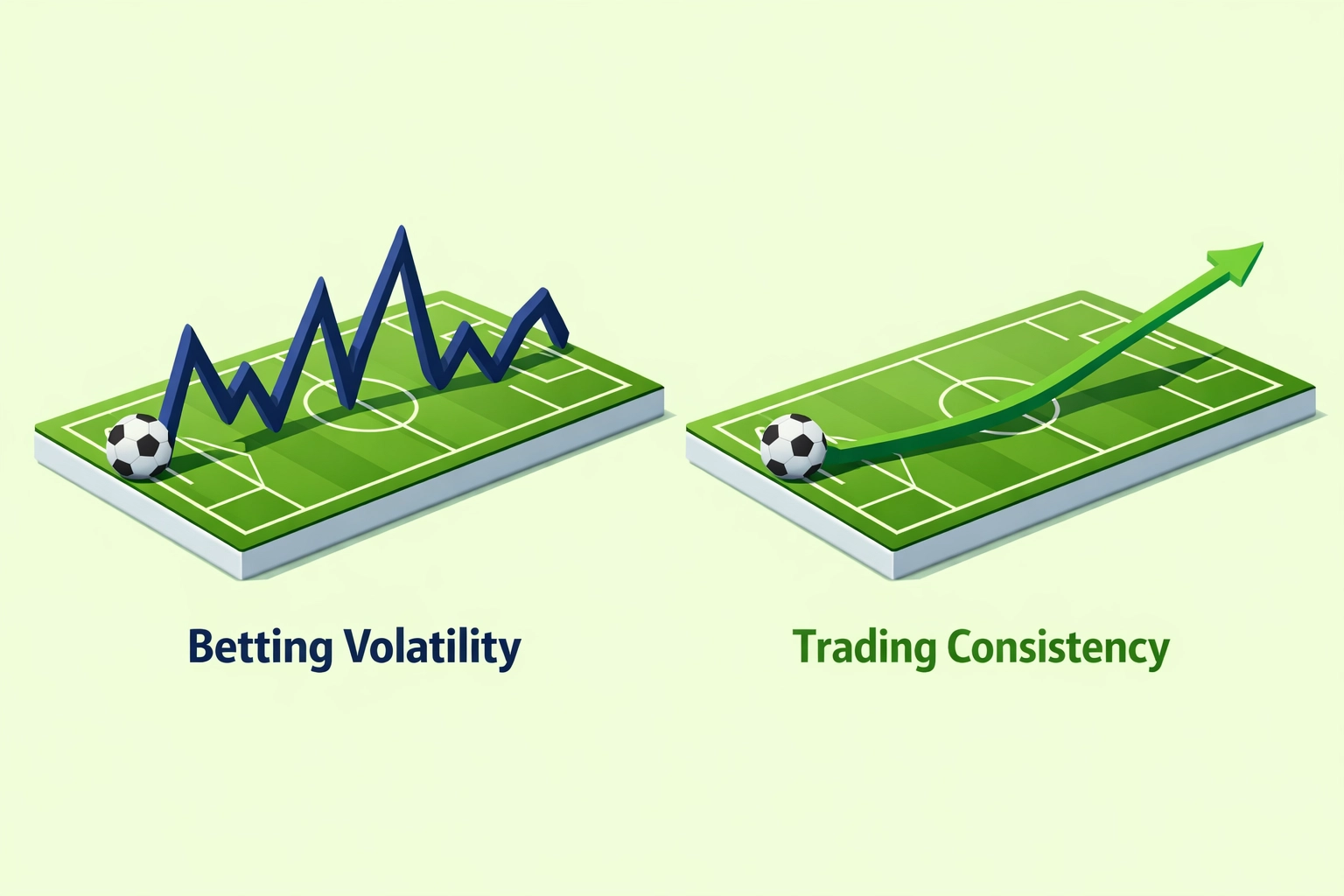
(Caption: A visual representation of a volatile betting bankroll vs a steady trading bankroll.)
Now, let’s talk about trading. Football trading happens on betting exchanges (like Betfair or Smarkets). Instead of betting against a bookmaker, you’re betting against other people.
The biggest difference? You aren’t necessarily looking for who will win the match. You’re looking for how the odds will move.
In football trading, you use two types of bets:
By combining these, you can “lock in” a profit before the game even finishes.
Imagine you’ve backed a team to win. They score in the 20th minute. In traditional betting, you still need them to hold that lead. In football trading, the odds for that team will drop significantly after the goal. You can now “Lay” that same team, effectively selling your position for a profit regardless of whether they go on to win, lose, or draw.
This is brilliant for your bankroll because you aren’t at the mercy of a 94th-minute equaliser. You’ve already “greened up” and moved on.
Trading isn’t a “set and forget” hobby. It requires you to be active while the match is in play. You need to understand market movements and have the discipline to take a small profit rather than holding out for the big win. It’s more of a job than a weekend flutter.
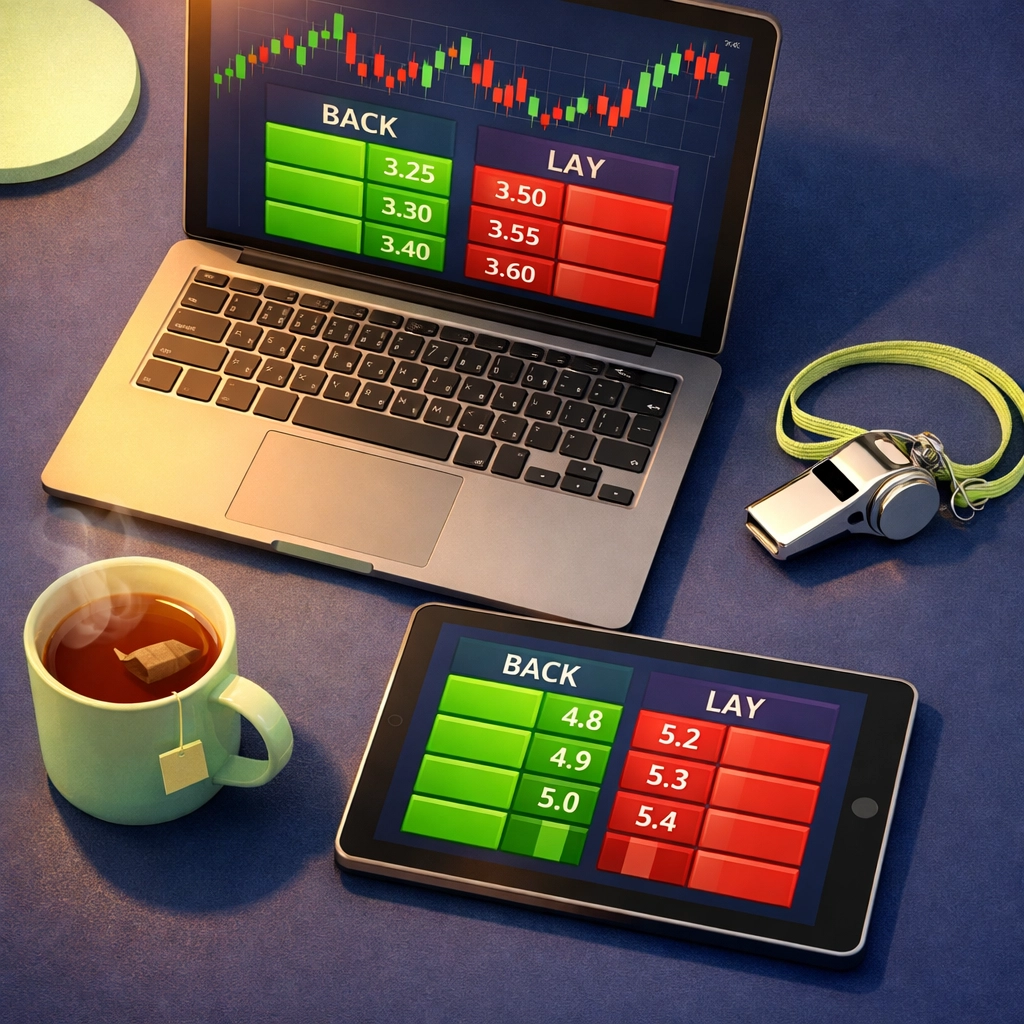
(Caption: A trader’s setup, multiple screens showing live match data and exchange prices.)
Whether you’re betting or trading, your bankroll is your ammunition. Without it, you’re just a spectator.
In betting, your bankroll is often under siege. Because you’re trying to predict final outcomes, you might go on a five-game losing streak. If you’re betting 5% of your bankroll per game, you’ve just lost a quarter of your funds. That hurts.
In trading, your “at-risk” amount is usually much smaller. If you enter a trade and it starts going against you, you can “exit” the trade for a small loss (a “red hedge”). You might only lose 1% of your bankroll instead of the full 5%.
This is why trading is generally considered better for bankroll preservation. It’s about staying in the game as long as possible. As we say, it’s about learning to read the data to make informed decisions rather than just guessing.
Whether you want to be a sharp punter or a savvy trader, you can’t rely on your “gut feeling.” Your gut is usually just hungry or biased because you support the team.
To succeed in betting, you need to find value. You need to know if the odds offered by the bookie are higher than the actual statistical probability of the event. For example, if you’re looking at over 2.5 goals tips, you need to know if these two teams actually have a history of high-scoring games, or if the strikers are currently firing blanks.
To succeed in trading, you need to know when a goal is likely to happen. If you’re trading the “First Half Over 0.5 Goals” market, you want to enter the trade when the data shows both teams are attacking relentlessly. You can check out strategies for first half over 0.5 goals to see how the numbers back it up.
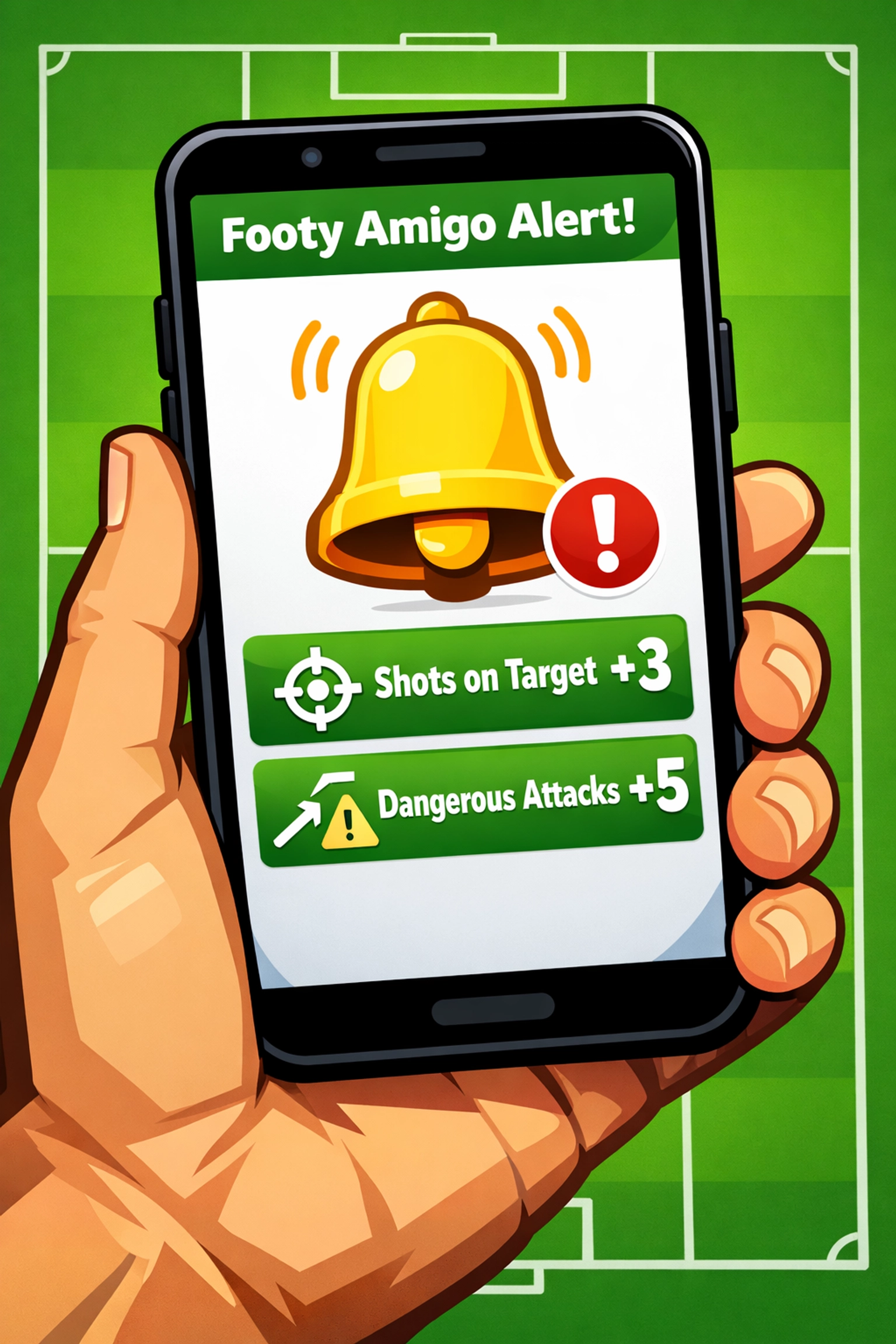
(Caption: A close-up of the Footy Amigo dashboard showing live in-play stats and historical data.)
Most people lose because they bet on the “big names.” They think, “Oh, it’s Manchester City, they always win.” Then City draws 0-0 against a bus-parking West Brom, and the bankroll takes a hit.
Professional traders and bettors use tools. They use scanners that alert them when a specific condition is met.
That is a signal. For a bettor, it’s a sign to jump on a late goal prediction. For a trader, it’s a signal that the “Under” odds are about to crash if a goal goes in, so it’s time to move.
Stop guessing. Start using scanners vs. gut feelings to actually see what’s happening on the pitch.
So, back to the big question: Betting or Trading?
Choose Football Betting if:
Choose Football Trading if:

(Caption: A happy fan at a football stadium, representing the joy of a well-executed strategy.)
If we’re talking strictly about bankroll health, trading wins by a mile. The ability to mitigate losses and lock in profits is the closest thing to a “safety net” you’ll find in this game.
However, football trading is hard work. It requires a different mindset. You aren’t a fan anymore; you’re an analyst.
For most of us, the sweet spot is somewhere in the middle. Use the data and betting analytics to find high-value bets, but perhaps use exchange-style thinking to “cash out” or hedge when the situation on the pitch changes.
Don’t just be a punter who hopes. Be a punter who knows. Whether you’re backing under 3.5 goals or trading the match odds, let the numbers do the heavy lifting for you.
Next time you place a bet, don’t just leave it. If your team goes 1-0 up, ask yourself: “If I could take 70% of my potential winnings right now and walk away, would I?” If the answer is yes because the other team is piling on the pressure, then you’re starting to think like a trader. Bankroll growth is built on the losses you don’t take, not just the wins you do.
Stay smart, use the data, and I’ll see you at the bookies (or the exchange)! ⚽️📈
[…] Trading is different. It’s the art of “buying” and “selling” your position while the game is happening. You aren’t just betting on who wins; you’re betting on how the odds will move. If you want a deeper dive into the nuances, check out our guide on football betting vs. football trading. […]